
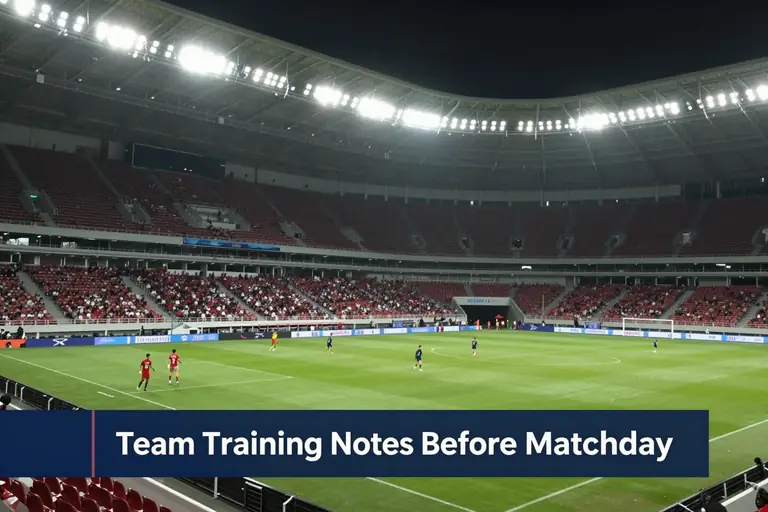
The Indispensable Role of Team Training Notes Before Matchday
In the high-stakes arena of competitive sports, particularly soccer, the pursuit of excellence hinges on meticulous preparation. The razor-thin margin between triumph and defeat frequently lies in the intricate details, and the cornerstone of this preparedness is the creation and utilization of comprehensive team training notes before matchday. These notes function as a holistic guide, ensuring that every player is synchronized, deeply understands their individual role, and is thoroughly equipped to confront the challenges that lie ahead on the pitch. Effective team training notes before matchday are crucial for success.
The absence of well-defined team training notes before matchday can expose a team to significant risks. A lack of clarity can permeate the squad, potentially triggering miscommunication, tactical breakdowns, and ultimately, a diminished probability of achieving success. Envision these notes as the architectural blueprint for a victorious game, meticulously outlining strategies, pinpointing pivotal opposing players, and spotlighting specific areas that demand improvement. Preparing team training notes before matchday is an investment in your team’s success.
Dissecting the Key Components of Effective Team Training Notes
So, what precisely should be incorporated into your team training notes before matchday to maximize their impact? A meticulously structured set of notes will typically encompass several critical areas, each contributing to the overall preparedness of the team: Creating detailed team training notes before matchday allows for a more strategic approach to the game.
1. Articulating the Tactical Strategy
This element forms the bedrock of any robust set of training notes. It’s imperative to clearly delineate the team’s intended formation, preferred playing style, and specific tactical instructions. For instance, will the team implement a high-pressing approach to aggressively win back possession? Will a defensive counter-attacking strategy be favored to exploit opponent vulnerabilities? What are the predetermined triggers that will prompt the team to seamlessly transition between different formations or playing styles based on the evolving dynamics of the game?
By meticulously detailing these tactical nuances within your team training notes before matchday, players are empowered to visualize and deeply internalize the overarching game plan. This ensures that each individual comprehends their specific responsibilities within the broader strategic framework, fostering a cohesive and synchronized team effort. Good team training notes before matchday provide a tactical advantage.
2. Conducting In-Depth Opponent Analysis
A comprehensive understanding of the opposition is of paramount importance. Your team training notes before matchday should incorporate a thorough and insightful analysis of the opposing team’s strengths, weaknesses, key players who can influence the game, and their commonly employed formations. Identify their preferred attacking patterns, any discernible defensive vulnerabilities that can be exploited, and their well-rehearsed set-piece routines.
Armed with this crucial information, players can anticipate their opponent’s tactical maneuvers, strategically exploit vulnerabilities in their formation or playing style, and effectively neutralize any potential threats posed by key opposing players. Knowing which players to mark tightly, which areas of the field to target during attacks, and how to disrupt their set-piece plays can significantly influence the ultimate outcome of the match. Strategic team training notes before matchday include thorough opponent analysis.
3. Defining Individual Player Roles and Responsibilities
While the overarching tactical strategy provides the general framework, clearly defined individual player roles are equally crucial for success. Your team training notes before matchday should precisely specify each player’s responsibilities, encompassing both their offensive and defensive duties. This includes defining their positioning on the field, assigning specific marking assignments to contain opposing threats, outlining preferred passing lanes to facilitate smooth ball movement, and providing detailed instructions for executing set-piece plays effectively.
This clarity in individual roles minimizes confusion and overlap, ensuring that players are working in perfect harmony towards achieving a common objective. When each player understands their specific contribution, the team functions as a well-oiled machine, maximizing its potential for success. Individual roles are clarified in team training notes before matchday.
4. Strategizing Set-Piece Plays
Set-pieces frequently present game-changing opportunities to score crucial goals or prevent the opposition from doing so. Your team training notes before matchday should meticulously outline pre-planned routines for corners, free kicks, and throw-ins, covering both attacking and defensive scenarios. Clearly specify which players will be responsible for taking the set-pieces, which players will make strategic runs to create scoring opportunities, and which players will be assigned the critical task of marking key opponents to prevent them from capitalizing on set-piece situations.
5. Formulating Contingency Plans
As the saying goes, no battle plan survives first contact with the enemy. Your team training notes before matchday should also incorporate well-defined contingency plans to address various unforeseen scenarios that may arise during the match. What actions will the team take if they concede an early goal, potentially disrupting their initial game plan? What adjustments will be made if a key player sustains an injury, forcing a substitution and a reshuffling of the lineup? How will the team react if the opponent unexpectedly changes their formation, requiring a tactical shift to maintain control of the game?
By having pre-determined solutions to these potential problems, the team can adapt quickly and effectively to changing circumstances, minimizing disruption and maintaining focus on the ultimate goal of securing victory. Effective team training notes before matchday prepare for unexpected scenarios.
6. Establishing Clear Communication Protocols
Effective communication is paramount for success on the field. Your team training notes before matchday should outline key communication protocols, including specific calls and signals that players should use to communicate with each other seamlessly during the match. This can include calls for initiating pressing triggers to win back possession, assigning marking assignments to contain specific opponents, or signaling changes in formation to adapt to the evolving dynamics of the game.
Effective Distribution and Review of Team Training Notes
Creating comprehensive team training notes before matchday is only the initial step. The true value lies in ensuring that the notes are effectively distributed to all players and thoroughly reviewed before the match. There are several proven methods to achieve this:
- Email Distribution: Distribute the notes electronically via email, ensuring that all players have convenient access to them on their smartphones or tablets, allowing them to review the information at their leisure.
- Team Meetings: Conduct dedicated team meetings to collectively review the notes, providing a platform for players to ask clarifying questions and address any uncertainties they may have regarding the game plan.
- Online Platforms: Leverage online team management platforms to share the notes digitally, track player engagement with the material, and facilitate discussions around the tactical strategies.
- Printed Copies: Provide printed copies of the notes for players to keep with them during training sessions and pre-match preparation, allowing them to easily reference key information and reinforce their understanding of the game plan.
The fundamental objective is to ensure that all players have ample opportunity to study and internalize the information contained within the team training notes before matchday. Encourage players to actively engage with the material by taking their own notes, highlighting key points that resonate with them, and seeking clarification on any aspects they find challenging.
Leveraging Video Analysis to Enhance Team Training Notes
Video analysis has emerged as an indispensable tool in modern soccer, providing invaluable insights into both team and individual performance. Incorporating relevant video clips into your team training notes before matchday can significantly enhance their effectiveness, making the information more engaging and easier to understand. Utilize video to visually illustrate complex tactical concepts, highlight specific weaknesses in the opponent’s game, and demonstrate the precise execution of specific player movements or strategic plays.
For example, you could include video clips of the opponent’s key striker making dangerous runs into the penalty area, or demonstrate how your team can effectively exploit a weakness in their defensive line by showcasing successful attacking plays that targeted that specific area. These visual aids can transform the training notes from a purely textual document into a dynamic and interactive learning experience.
Adapting Team Training Notes Based on Performance Feedback
Team training notes before matchday should not be treated as static documents, but rather as living resources that are continuously reviewed and adapted based on the team’s performance and the evolving dynamics of the game. After each match, conduct a thorough analysis of the team’s performance, identifying areas where the notes could be improved to better prepare the players for future challenges. Continuously improving team training notes before matchday is key.
Did the implemented tactical strategy prove effective in neutralizing the opponent’s strengths and exploiting their weaknesses? Were the individual player roles clearly defined and effectively executed on the field? Did the contingency plans adequately address unforeseen circumstances that arose during the match? Use this valuable feedback to refine your notes for subsequent matches, ensuring that they remain relevant, accurate, and optimized for peak performance. Remember, the ultimate goal is to create a dynamic resource that continuously enhances the team’s preparation and contributes to their overall success.
Consider also how the team training notes before matchday can be tailored to reflect the unique skills, experiences, and learning styles of individual players. Some players may benefit from more detailed explanations or visual aids, while others may prefer concise summaries and bullet-point lists. By adapting the notes to suit individual learning preferences, you can maximize their effectiveness and ensure that every player is fully engaged and prepared for the upcoming match.
Effective team training notes before matchday are not merely about outlining tactics and strategies; they are also about fostering a culture of continuous learning, improvement, and collaboration within the team. By consistently reviewing and adapting the notes based on performance feedback and individual player needs, you can create a powerful tool that helps your team reach its full potential and achieve sustained success on the field.
Remember to consider external factors as well when creating your team training notes before matchday. The prevailing weather conditions, the characteristics of the pitch surface, and the overall atmosphere of the stadium can all exert a significant influence on the flow and outcome of the game. Adapting your strategy to account for these external factors can provide your team with a crucial competitive advantage. For example, a windy day might necessitate a more direct and aerial style of play, while a slippery pitch might require players to exercise greater caution in their tackles and movements. Always consider the environment when creating team training notes before matchday.
Find out the Latest World Cup Team News Today.
The Psychological Impact of Well-Prepared Training Notes
Beyond the tangible tactical and strategic advantages, meticulously crafted team training notes before matchday can also exert a profound psychological impact on players, boosting their confidence and reducing pre-match anxiety. Knowing that they are well-prepared, possess a clear understanding of the game plan, and have the necessary tools to execute their roles effectively can instill a sense of assurance and composure that translates into improved performance on the field.
When players feel confident and prepared, they are more likely to take calculated risks, make decisive plays, and perform at their absolute best under pressure. Conversely, a lack of adequate preparation can breed uncertainty, hesitation, and ultimately, diminished performance, hindering the team’s ability to achieve its objectives. Confident players are a result of good team training notes before matchday.
Common Mistakes to Avoid When Creating Team Training Notes
While team training notes before matchday are undeniably essential, it’s equally important to avoid common mistakes that can inadvertently undermine their effectiveness and detract from their intended purpose:
- Overly Complex Notes: Strive to keep the notes concise, clear, and easy to understand, avoiding the use of obscure jargon or overly technical language that may confuse or alienate some players.
- Lack of Clarity: Ensure that all instructions are unambiguous and leave no room for misinterpretation, providing specific details and concrete examples to illustrate key concepts and strategies.
- Inconsistent Information: Maintain consistency between the information presented in the notes, the content covered in training sessions, and the tactical approaches employed in previous matches, reinforcing key principles and avoiding confusion.
- Failure to Update: Regularly review and update the notes to reflect the team’s progress, the opponent’s evolving characteristics, and any necessary adjustments to the overall tactical strategy, ensuring that the information remains current and relevant.
- Ignoring Player Feedback: Actively solicit feedback from players regarding the effectiveness of the notes, encouraging them to share their perspectives and suggestions for improvement, and making adjustments accordingly to enhance their value and impact.
Conclusion
In conclusion, team training notes before matchday represent an indispensable tool for any soccer team aspiring to achieve sustained success in the competitive arena. By meticulously crafting these notes, distributing them effectively to all players, and continuously adapting them based on performance feedback and evolving circumstances, coaches can ensure that their players are consistently well-prepared, confident, and ready to perform at their absolute best when it matters most. Remember, meticulous preparation is the key to unlocking your team’s full potential, maximizing their chances of achieving victory, and realizing their collective aspirations. The best teams utilize team training notes before matchday.
FAQ
Q: How frequently should team training notes be updated to maintain their relevance?
A: Ideally, team training notes before matchday should be reviewed and updated after each match and training session to ensure that they accurately reflect the team’s progress, the opponent’s specific characteristics, and any necessary adjustments to the overall tactical strategy.
Q: What constitutes the most effective method for distributing team training notes to players?
A: The most effective approach typically involves a combination of methods, such as email distribution, dedicated team meetings, online platform integration, and the provision of printed copies, ensuring that all players have access to the notes in a format that best suits their individual learning preferences and logistical constraints.
Q: What steps should be taken if a player expresses difficulty understanding the team training notes?
A: It’s crucial to encourage players to proactively ask questions and seek clarification on any aspects of the notes that they find challenging. Provide additional explanations, visual aids, or one-on-one coaching to ensure that all players fully comprehend the team training notes before matchday and are adequately prepared for the upcoming match.