
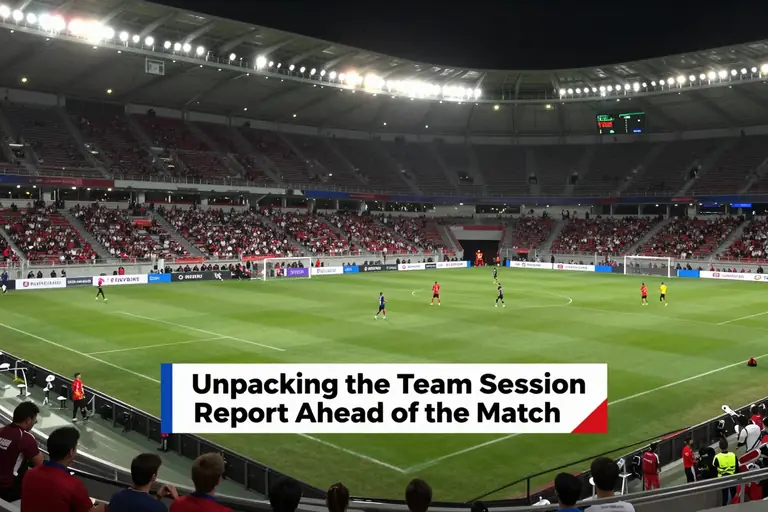
Understanding the Team Session Report Ahead of the Match
As dedicated football fans, the anticipation building up to a big game is palpable. Much of that excitement comes from knowing what’s happening behind the scenes, beyond the 90 minutes of play. The team session report ahead of the match offers a crucial, albeit often veiled, glimpse into a squad’s preparedness, revealing vital information about player fitness, tactical adjustments, and overall morale. For those looking to understand the intricate dynamics at play in professional football, this report is invaluable. It helps us gauge a team’s potential performance, identify key areas that might influence the outcome on the pitch, and appreciate the meticulous planning that goes into every fixture. It’s more than just a summary; it’s a narrative of readiness, a blueprint for battle.
Current Situation: A Look at Recent Form and Momentum
Before diving into the specifics of any training session, it’s essential to consider a team’s recent form and momentum. A string of victories, especially dominant ones, can significantly boost confidence and create a winning atmosphere, masking minor imperfections. Conversely, consecutive losses or draws, particularly if they expose recurring weaknesses, might signal underlying issues that coaches are working diligently to address. We analyze not just the results but also the manner in which they were achieved. Were the wins dominant, showcasing fluid attacking play and solid defense, or did they come from narrow margins, perhaps due to individual brilliance rather than cohesive team effort? Were the losses due to a lack of attacking prowess, defensive frailties that opposition teams consistently exploit, or perhaps an inability to control the midfield and dictate the tempo? Understanding these patterns provides critical context for the training focus. For instance, a team struggling to score might dedicate more time to intricate attacking drills, focusing on movement off the ball, finishing, and creating chances. In contrast, one conceding too many goals would likely prioritize defensive shape, pressing triggers, and set-piece organization. This holistic view of recent performance sets the stage for interpreting the nuances of the training report.
Team Analysis: What the Training Session Reveals About Strategy and Cohesion
The team session report ahead of the match often highlights specific areas of focus during training, offering insights into the coaching staff’s priorities. Coaches use these sessions to fine-tune strategies, reinforce game plans, and ensure every player understands their individual and collective roles within the system. We often see drills concentrating on possession-based play, high pressing, swift counter-attacks, defensive transitions, or specialized set-piece routines. The intensity of these sessions can also be telling. A high-intensity, competitive session, perhaps featuring small-sided games with aggressive tackling and quick transitions, usually indicates a team that is sharp, physically primed, and mentally ready to battle. Conversely, a more subdued, recovery-focused session, emphasizing light technical work and stretching, might suggest fatigue from a recent demanding schedule or a need to conserve energy for the upcoming fixture. Observing which players are paired together in drills, or which tactical groups are formed, can also hint at potential starting lineups, new tactical partnerships being forged, or specific roles being practiced. For example, a defender consistently linking up with a winger in attacking drills might indicate a planned overlap strategy. The communication among players and coaching staff during these sessions also offers clues about team cohesion and morale.
Player Watch: Key Absences, Returns, and Individual Progress
One of the most impactful aspects of any pre-match report is the update on player availability. Injuries and suspensions can significantly alter a team’s dynamics, forcing coaches to rethink their formation, tactical approach, and even their entire game plan. A major player’s absence might force a coach to rely on less experienced players, potentially changing the team’s style of play. Conversely, the much-anticipated return of a key player from injury can provide a massive boost in both quality and morale, invigorating the squad and offering new tactical options. We pay close attention to any news regarding star players – their recovery progress, any new knocks picked up in training, or their integration back into full team sessions. The physical condition of the entire squad is always a primary concern, as even slight discomfort or a minor niggle can affect performance at the highest level. The medical team’s assessment is critical here, dictating who participates fully, who might be on a modified training program, and who is ultimately cleared for selection. Beyond injuries, reports might also touch on individual player form, highlighting those who are excelling in training or those who might need extra focus to regain their best. This individual monitoring is crucial for squad management and maximizing performance.
Tactical Overview: Preparing for the Opponent and Game Plan Execution
Every match presents a unique tactical challenge, and training sessions are where teams meticulously prepare to meet it. The team session report ahead of the match often gives crucial clues about how a team plans to nullify the opponent’s strengths and exploit their weaknesses. This could involve specific defensive drills to counter a fast attacking line, practicing zonal marking against a team known for intricate passing, or offensive patterns designed to break down a compact, low-block defense. Coaches might use practice matches or simulated scenarios to replicate situations they expect to face, allowing players to rehearse their responses under pressure. Analyzing these tactical preparations helps us understand the strategic battle that will unfold on the pitch. It’s not just about individual brilliance, but how 11 players work together as a cohesive unit to execute a well-rehearsed game plan. This includes set-piece practice, both offensive and defensive, which can often be the deciding factor in tight encounters. The report might mention specific players being tasked with man-marking duties or practicing particular runs to create space for teammates. This level of detail provides a deeper appreciation for the chess match between opposing managers.
Psychological Edge: Morale, Chemistry, and Motivation
Beyond the physical and tactical aspects, a team session report can also subtly convey information about the squad’s psychological state. High spirits, visible camaraderie, and intense but respectful competition in training are indicators of strong team chemistry and high morale. Conversely, any signs of dissent, lack of effort, or disengagement could signal underlying issues that might affect performance. Coaches often employ various methods to boost motivation, from inspiring team talks to competitive drills with rewards. The atmosphere around the training ground is a vital component of preparation. A positive, focused environment often translates to a confident and resilient performance on match day. The report might highlight specific team-building activities or individual counseling sessions, showcasing the holistic approach to player welfare and mental readiness. A team that believes in itself and its game plan is often halfway to victory.
Head-to-Head Records: Historical Context and Psychological Impact
While not directly part of a single training session, historical head-to-head records often influence how coaches prepare their teams and the psychological approach taken. If a team has consistently struggled against a particular opponent, the training focus might shift to addressing those recurring issues, perhaps through specialized drills designed to overcome a specific tactical disadvantage. Conversely, a dominant record against an upcoming rival could instill confidence, though experienced coaches will always guard against complacency, emphasizing that past results don’t guarantee future success. We look at past encounters to identify patterns, such as which players have performed well in these fixtures, what tactical approaches have proven effective or ineffective, and how the teams have evolved since their last meeting. This historical context provides another layer of understanding when interpreting the current training focus and predicting the psychological state of the players. It helps to explain why certain drills might be prioritized, as coaches try to either repeat past successes or rectify previous failures.
FAQ
What is a team session report?
A team session report provides comprehensive updates on a football team’s training activities, including player fitness, injury status, tactical preparations, specific drills, and overall squad morale leading up to an important match. It’s a snapshot of the team’s readiness.
Why is player fitness and availability so important in these reports?
Player fitness and availability are paramount because injuries or fatigue can significantly impact a team’s overall strength, tactical options, and performance. The absence of key players often forces coaches to adapt their entire game plan, while the return of a star player can provide a substantial boost.
How do coaches use training sessions for tactical preparation against an opponent?
Coaches meticulously use training sessions to implement specific game plans tailored to the upcoming opponent. This involves practicing formations, working on set-pieces (both offensive and defensive), simulating scenarios expected during the match, and focusing on nullifying the opponent’s strengths while exploiting their weaknesses.
Can these reports accurately predict match outcomes?
While team session reports offer invaluable insights into a team’s readiness, strategy, and overall state, they do not guarantee match outcomes. Football is inherently unpredictable, and many factors can influence a game, including individual moments of brilliance, referee decisions, weather conditions, and sheer luck, which cannot be captured in a training report.
What kind of information is typically covered in a comprehensive team session report ahead of the match?
These reports typically cover a wide array of information: detailed player injury updates and recovery progress, specific tactical drills being practiced, observations on team morale and chemistry, potential starting lineups or tactical adjustments, an assessment of individual player form, and specific preparations designed to counter or exploit the upcoming rival’s style of play.
How do these reports help fans and analysts understand the game better?
For fans and analysts, these reports offer a deeper understanding of the strategic thinking behind a match. They move beyond basic statistics to explain why a team might adopt a certain approach, who is likely to play, and what challenges the team is facing or preparing for. This insight enriches the viewing experience and provides a more informed perspective on team performance.